

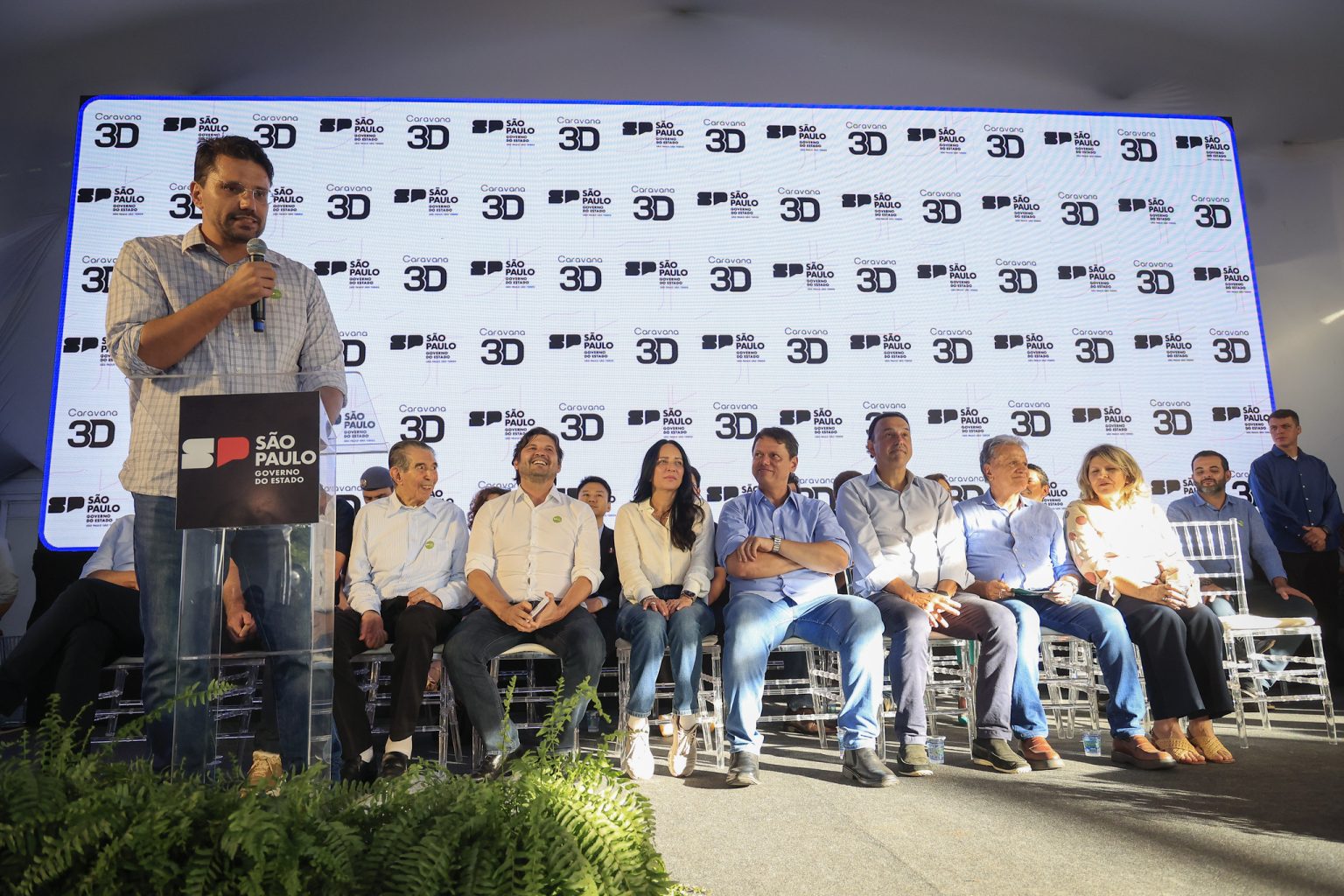
The Government of São Paulo carried out, this Wednesday (8), a technical visit to the works of the Intercity Train (TIC) North Axis, in Vinhedo. The agenda, which is part of the 3D Caravan in the Campinas region, marks a new stage of one of the main mobility projects underway in the State and reinforces progress in the revival of regional passenger rail transport in São Paulo.
Works began on March 27, and the first interventions are taking place on the stretch between Campinas and Jundiaí. In this initial phase, activities include the installation of the construction site and support areas, site preparation, earthworks, retaining works, and the implementation of an underpass beneath the railway for vehicle crossings and removal of interferences.
“We have many important initiatives taking place in the Campinas region, but perhaps the most emblematic is the start of these Intercity Train works. São Paulo grew along railway lines. Industrial development and the growth of cities were connected to the railways. Over time, that was lost. Now we are making a major effort to bring railways back. Freight rail is receiving investments to increase capacity. But one thing was missing: passenger rail transport. We needed to fill this gap and take the first step, which is what we are doing now with the Intercity Train,” said Governor Tarcísio de Freitas.
With an estimated investment of R$ 14.2 billion, the TIC North Axis project includes three integrated services: the Intercity Train (TIC), an express service between São Paulo and Campinas; the Intermetropolitan Train (TIM), with stops between Jundiaí and Campinas; and the modernization of the metropolitan Line 7-Rubi.
The Intercity Train will be Brazil’s first medium-speed train, with speeds of up to 140 km/h, capacity for approximately 860 passengers per trip, and an estimated travel time of 64 minutes on the 101-kilometer route between São Paulo and Campinas. Operations are scheduled to begin in 2031. The Intermetropolitan Train, expected to start operating in 2029, will connect Jundiaí and Campinas along a 44-kilometer route, with stops in Louveira, Vinhedo, and Valinhos and an estimated travel time of approximately 33 minutes.
Throughout implementation, the project is expected to generate more than 10,000 direct and indirect jobs, in addition to boosting the regional economy and strengthening the railway production chain in the State.
“The TIC North Axis will transform mobility between São Paulo and the Campinas region, reducing travel time and offering a modern, comfortable and sustainable alternative for the population. It is an investment that creates jobs, boosts the economy and reinforces the State’s commitment to long-term solutions that improve people’s lives,” said Rafael Benini, Secretary for Investment Partnerships of the State of São Paulo.
The TIC will directly benefit 11 municipalities and is expected to serve approximately 672,000 passengers per day, consolidating a new axis of integration between the capital and the interior of São Paulo. The project expands connectivity between strategic economic and population hubs, reduces travel time and strengthens rail transport as a sustainable and efficient alternative for regional mobility.
In addition to the mobility gains, the project also helps prepare the railway infrastructure for the State’s future demands. As implementation advances, concessionaire TIC Trens and Chinese manufacturer CRRC have already begun planning the production of the new trains that will operate in the system. CRRC’s factory in Araraquara may be used to produce the TIM trains, reinforcing the potential for localizing part of railway production in São Paulo and stimulating industrial development related to the sector.
SP Nos Trilhos
The TIC North Axis is part of the SP Nos Trilhos program, an initiative of the Government of São Paulo that brings together more than 40 projects aimed at expanding and modernizing rail transport in the State. Altogether, the program totals more than R$ 194 billion in projected investments, more than 1,000 kilometers of tracks in Greater São Paulo, the interior and the coast, and the potential to generate 150,000 jobs.
3D Caravan
The 3D Caravan is an initiative of the Government of São Paulo that travels across the regions of the State to deliver public policies focused on the three pillars of the administration: development, dignity and dialogue. The proposal is to strengthen coordination with municipalities by promoting deliveries and investments that take local needs into account and contribute to improving the population’s quality of life. The delegation has already visited the regions of Vale do Paraíba, São José do Rio Preto, Araçatuba, Marília, Sorocaba, Presidente Prudente and Itapeva.
The Caravan reinforces the commitment of the São Paulo government to a closer and more integrated approach, based on listening to citizens and maintaining dialogue with local leaders. At each stage, visits are made to municipalities and concrete actions are announced in the areas of health, education, housing, infrastructure and public safety.