

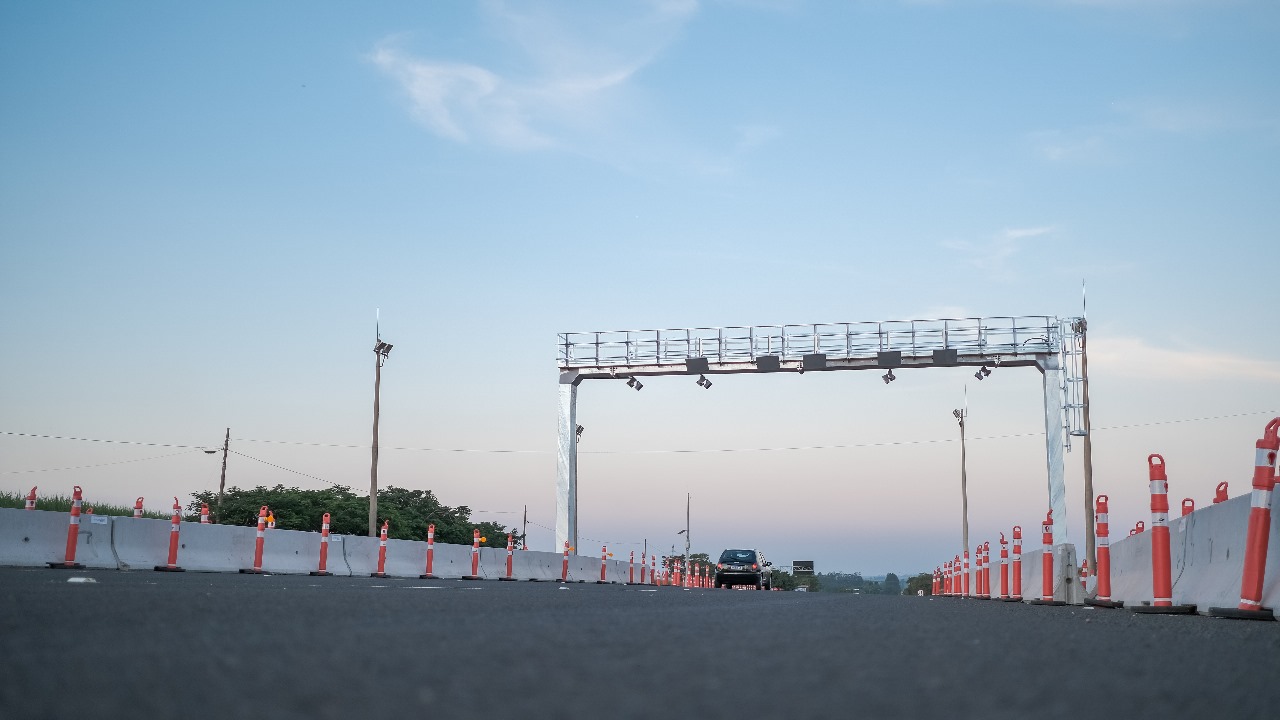
The Government of São Paulo is modernizing mobility on the roads with the implementation of the Free Flow electronic toll system. The new technology eliminates physical toll booths with barriers, using gantries installed along the highways. This allows vehicles to pass freely, without the need to stop. The result is immediate: greater safety, less congestion, no more queues and improved traffic flow.
In addition to speeding up travel, Free Flow in the new concessions will bring fairness in rates by allowing drivers to pay only for the stretch actually traveled. The system recognizes the vehicle by its license plate or TAG, and the amount can be paid via bank slip or through electronic payment operators.
One of the most relevant impacts of Free Flow is the improvement in road safety. With the removal of physical toll plazas, traffic jams and the risk of rear-end collisions are eliminated. In Jaboticabal, for example, there was a 100% reduction in accidents.
In the stretches under new concession, the comparison with the previous model is even more significant: there was a reduction of up to 95% in the occurrence of accidents, reinforcing the direct impact of the new technology on highway safety.
Free Flow also contributes to freer and more efficient traffic. Before the change, drivers would lose up to a minute stopping at plazas. Now, with automatic toll collection, queues have been completely eliminated.
And most importantly, the flow of vehicles remained stable, demonstrating that the transition was successful. In Itápolis, the variation was less than 5% (from 4,976 to 4,750 vehicles per day), and in Jaboticabal, the reduction was less than 2.5% (from 8,624 to 8,427 vehicles per day). There were no significant changes in peak times or daily distribution, indicating a smooth adaptation by users.
The new model is already present in new contracts and concession projects structured by the Secretariat of Investment Partnerships (SPI), such as Nova Raposo, Rota Sorocabana, Litoral Paulista, Circuito das Águas, Rota Mogiana and Lote Paranapanema. Even fairer fares are already a reality. One example: the fare on the stretch between Sorocaba and Alumínio fell by more than 20% and, with Free Flow in operation, the value will be reduced even further.
In addition, the new contracts guarantee total exemption from fares for motorcyclists and create continuous and free marginal roads, offering urban mobility without charges for local drivers this year — an important step forward in terms of inclusion and social justice.
Inspired by successful systems in countries such as Norway, Portugal, Canada and Chile, Free Flow is an efficient, safe and expanding technological solution in Brazil. More than modernizing charging, the new model contributes to reducing accidents, improves logistics and makes trips faster and more economical.