

In 2025, SP nos Trilhos consolidated the largest railway expansion cycle in São Paulo’s history, bringing together more than 40 projects structured by the Secretariat for Investment Partnerships (SPI), totaling approximately R$ 190 billion in estimated investments already contracted or under development. The program exceeds 1,000 kilometers of new rail lines, connects the Greater São Paulo area to the interior and the coast, is expected to generate around 150,000 jobs, and reinforces the State’s strategy to expand mobility, reduce inequalities and stimulate local economies.
Among the main highlights is the progress of Line 6–Orange, the largest urban mobility project currently under construction in Brazil. In 2025, the project surpassed 75% completion and mobilizes more than 10,000 workers, including direct and indirect jobs. With estimated investments of R$ 19.1 billion, the line will have 15 stations over 15.3 kilometers, with operations scheduled in two phases: Brasilândia–Perdizes in 2026 and full service to São Joaquim in 2027. The project will strengthen the North–Central axis of the capital and expand connections to universities, innovation hubs and other transit lines.
Another milestone in 2025 was the concession of Lines 11–Coral, 12–Safira and 13–Jade, known as the Alto Tietê Lot, which foresees estimated investments of R$ 14.3 billion and the creation of approximately 2,500 jobs during the implementation phase through 2026. The new concessionaire will deliver eight new stations, modernize 27 existing stations and expand the network by 22.6 kilometers of track. The project includes extending Line 11 to César de Sousa, Line 12 to Suzano, and Line 13 to Gabriela Mistral and Bonsucesso, expanding service to more than 4.6 million residents. By 2040, the three lines are expected to carry 1.3 million passengers per day.
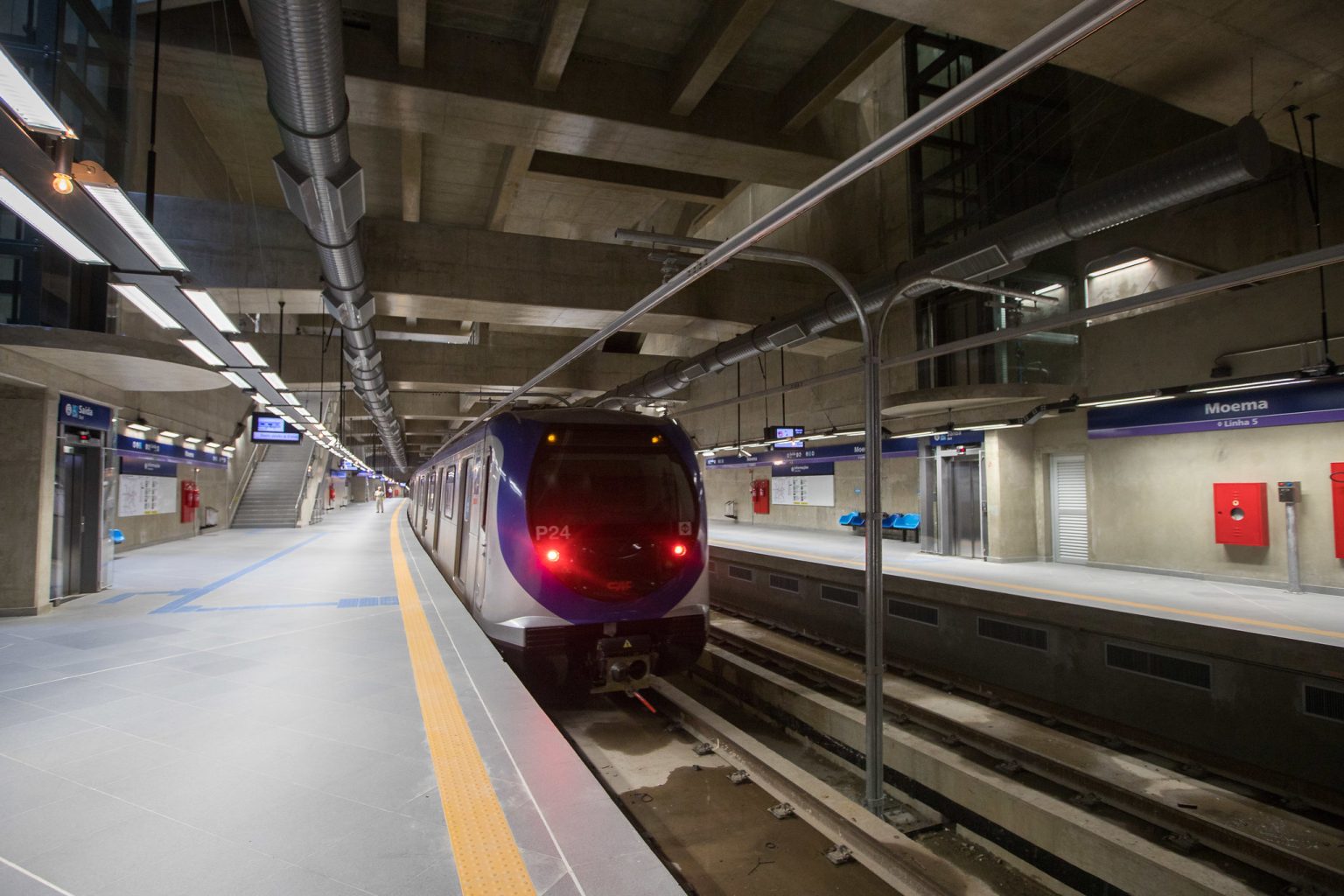
The program also advanced the expansion of already concessioned metro lines. The extension of Line 4–Yellow to Taboão da Serra is in the final stage of contractual negotiations. Meanwhile, the extension of Line 5–Lilac to Jardim Ângela—authorized by law and under development—foresees estimated investments of R$ 2.72 billion, bringing high-capacity transport to one of the most populous areas of the capital.
In the metropolitan region, the Government concluded the public consultation and hearings for the ABC–Guarulhos Lot, which will modernize Line 10–Turquoise and implement the future Line 14–Onyx, with estimated investments of R$ 19 billion. Line 16–Violet, planned with 19 kilometers, 16 stations and estimated demand of 475,000 passengers per day, also completed its public participation phase and is moving into the next stages of structuring.
In the interior of the State, SP nos Trilhos took decisive steps toward delivering Brazil’s first medium-speed train. The TIC North Axis, connecting Campinas and São Paulo, foresees estimated investments of R$ 14.2 billion and more than 10,000 jobs, linking the cities in approximately 60 minutes and integrating with the TIM and Line 7–Rubi. Construction is expected to begin in the first half of 2026. The TIC Sorocaba project, with estimated investments of R$ 12 billion, completed its public hearing phase in 2025 and is expected to serve up to 50,000 passengers per day.
The program also continues structuring the remaining Intercity Train corridors—East and South—as well as light rail projects in Campinas, Sorocaba and the Baixada Santista, all under development with planned investments and integration into the future regional network.
This set of concession projects consolidates SP nos Trilhos as the largest railway mobility program in Brazil—focused on connecting regions, generating jobs, boosting economies and improving the daily lives of millions of passengers who rely on a modern, safe and efficient transportation system. In addition to urban and regional infrastructure, the program also includes Railway Tourism initiatives, with the potential to generate R$ 1.8 billion over the next decade.