

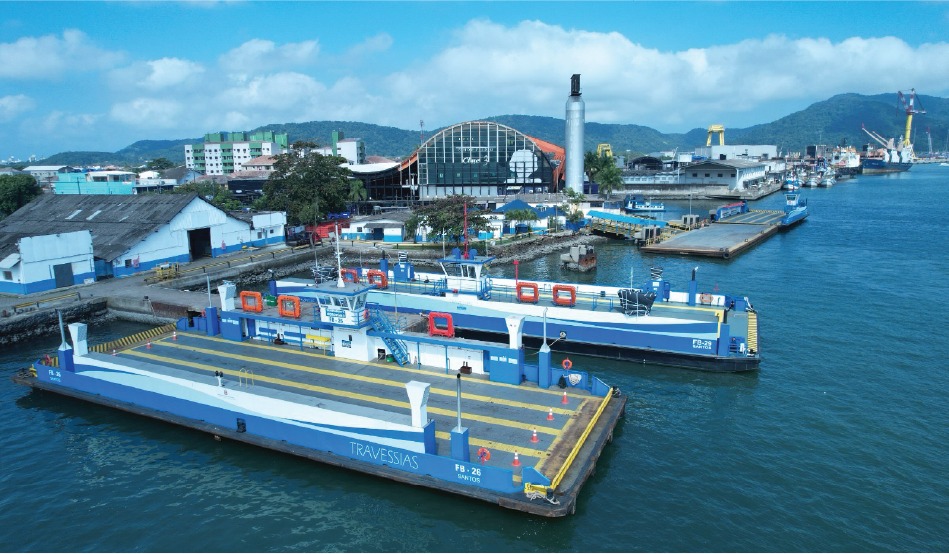
The Government of São Paulo, through the Secretariat for Partnerships and Investments (SPI), is taking another step toward sustainable mobility. The new Public-Private Partnership (PPP) for the Waterway Crossings, to be auctioned on November 13 at B3, includes the gradual replacement of the current diesel fleet with more than 40 fully electric vessels — one of the largest decarbonization initiatives in Brazil’s waterway transport sector.
The project reinforces the state’s commitment to ESG practices and the reduction of greenhouse gas emissions. Modernization is expected to eliminate up to 18,000 tons of CO₂ per year on coastal crossings alone, in addition to reducing noise and operational costs.
“This leap in quality combines innovation, sustainability, and efficiency in the delivery of an essential public service,” said Edgard Benozatti Neto, CEO of Companhia Paulista de Parcerias.
The project includes 14 crossings in different regions of the state, serving about 40,000 people per day, with estimated investments of R$ 2.5 billion. It covers eight coastal lines, three in the São Paulo Metropolitan Region, and three in the Paraíba Valley.
Beyond its environmental focus, the PPP will also improve comfort, safety, and agility for users, with modernized terminals, expanded docks, and state-of-the-art vessels. Among the routes included are São Sebastião–Ilhabela, Santos–Guarujá, Bertioga–Guarujá, Cananéia–Ilha Comprida, Iguape–Juréia, and Bororé–Grajaú, among others.
The system currently serves around 11 million passengers and 10 million vehicles per year and will maintain the existing fare base, preserving free access and current benefits.