

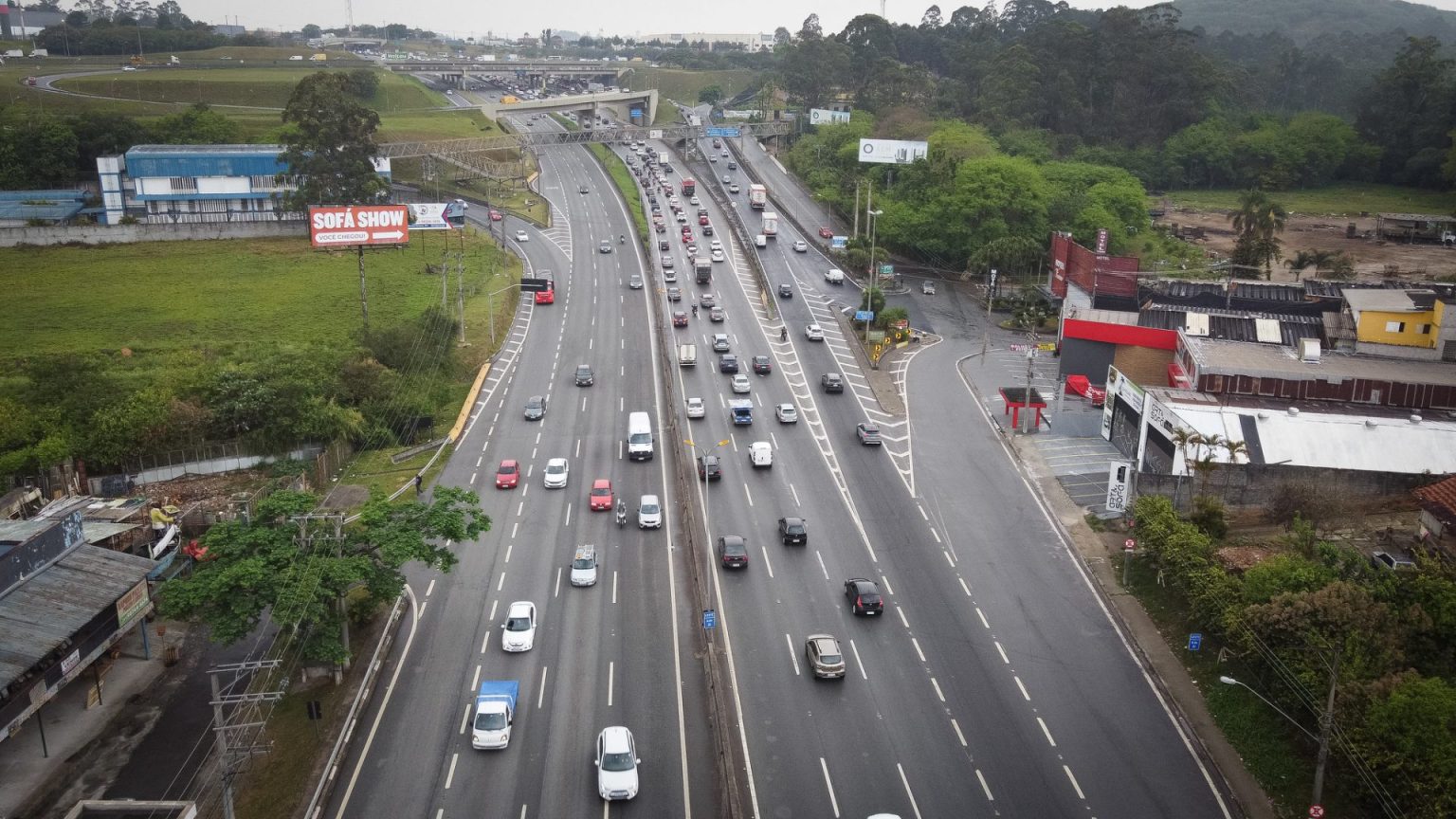
The São Paulo state government has begun road improvements along the Raposo Tavares corridor as part of the new concession. These works are part of the initial package of priority deliveries.
Since March, activities have included pavement restoration, improved road signage, brush and grass cutting, vegetation trimming, and reconstruction of drainage systems, with the restoration of culverts and channels. Works also include maintenance of bridges, viaducts, and pedestrian overpasses, as well as the installation of Variable Message Signs (VMS), ambulances equipped with mobile ICUs and physicians, connected patrol vehicles, tow trucks, and User Service Centers (SAUs).
The first deliveries are already being completed along the Bunjiro Nakao Highway (SP-250), between Piedade and Ibiúna. Other work fronts are progressing rapidly along the João Leme dos Santos Highway (SP-264), between Sorocaba and Salto de Pirapora; the Tenente Celestino Américos Highway (SP-079), in the municipalities of Sorocaba, Piedade, and Juquiá; the Raposo Tavares Highway (SP-270), in the stretches of Cotia, São Roque, Alumínio, Sorocaba, and Araçoiaba da Serra; and the Castello Branco Highway (SP-280), between Itu and São Roque. These initial improvements are expected to be completed by April 2026.
“We are maintaining structures in urban areas for traffic monitoring, gathering data that will guide future investments, such as the Sorocaba western bypass. These tools will help plan capacity expansions at the right time, ensuring that works are accompanied by real improvements in traffic flow and safety. This will turn the Raposo Tavares into an efficient access corridor to São Paulo, complementing the Castello Branco and strengthening regional mobility,” said Rafael Benini, São Paulo’s Secretary of Partnerships and Investments.
Direct benefits
The concession contract foresees R$ 8.8 billion in investments along 460 km of highways, directly benefiting 17 municipalities in the state’s interior. Improvements will serve cities such as Alumínio, Araçariguama, Araçoiaba da Serra, Cotia, Ibiúna, Itu, Juquiá, Mairinque, Piedade, Pilar do Sul, Salto de Pirapora, São Miguel Arcanjo, São Roque, Sorocaba, Tapiraí, Vargem Grande Paulista, and Votorantim. Key projects include 68 km of duplications, 40 km of frontage roads, 73 km of additional lanes, 172 km of shoulders, 21 new pedestrian overpasses, and the construction of strategic bypasses, such as the Juquiá bypass.
In the Sorocaba region, works include upgrades to the SP-075 (Castelinho), duplications between Sorocaba and Piedade, improvements to interchanges such as Celso Charuri and Aparecidinha, and frontage roads to improve traffic flow and urban access.
Since March, the state government has implemented significant toll reductions along various stretches. On the São Paulo–Sorocaba corridor, for instance, the rate dropped from R$ 26.70 to R$ 20.50 — a major step forward in road mobility and accessibility policy.
Savings will be further enhanced with the removal of physical toll plazas and the adoption of automatic charging through gantries placed along the highway. The greater number of gantries will allow charging for shorter stretches, ensuring fairer tolling. In addition to savings, this model improves traffic flow, road safety, reduces carbon emissions, and modernizes the state’s road infrastructure.
Drivers using electronic toll tags receive a 5% discount, while frequent users get an additional 20% reduction, and motorcycles are exempt.
The Raposo Tavares corridor is also an important economic driver: the concession has the potential to generate more than 93,000 jobs statewide, with 37,000 in the Sorocaba region alone. The upgraded road network will directly support goods transportation, attract investments, and improve regional mobility.
São Paulo Pra Toda Obra program
Through the São Paulo Pra Toda Obra program, the state is delivering real benefits to residents across all regions, promoting the modernization of state highways — both public and concessioned — as well as local roads. This is the largest road infrastructure program in the state’s history, with R$ 30 billion in delivered, ongoing, and planned works across public and concessioned highways.
The initiative, which is set to expand, covers 22,300 kilometers — equivalent to the distance from São Paulo to Japan. Works encompass major highways, state roads, concessioned stretches, and local roads. For the first time, over 1,500 public and private projects are being implemented in a complementary way, boosting state development.
The impact on the job market is also significant: about 250,000 jobs — more than the entire population of medium-sized cities such as Araçatuba, which has around 200,000 residents. In addition, the program benefits 8 out of 10 municipalities in São Paulo and reaches over 540 cities.