

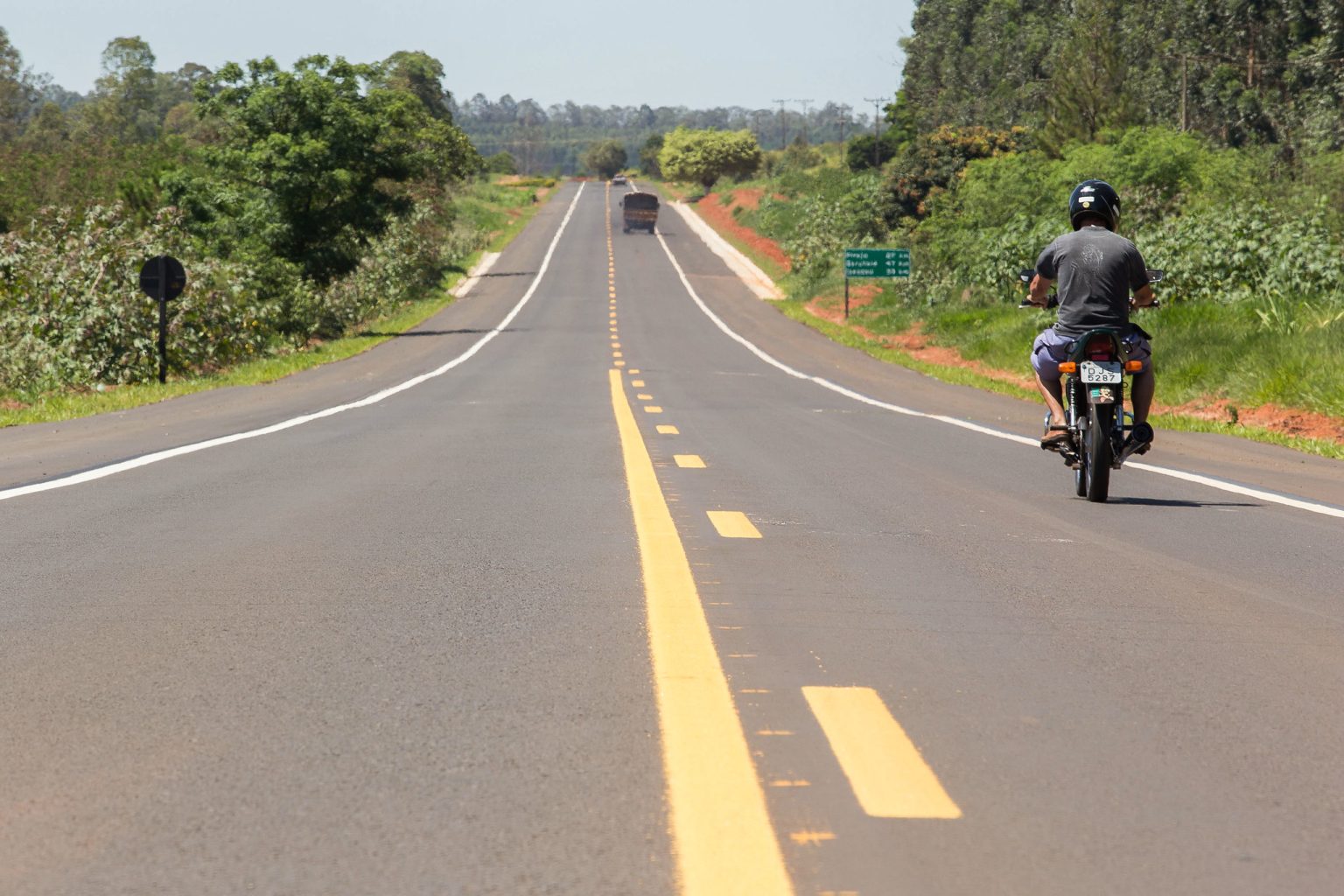
The Government of São Paulo’s project for the Paranapanema Lot includes the adoption of the international iRAP (International Road Assessment Programme) methodology in managing road safety along 285 kilometers of highways in the state’s interior. The European model, which is expected to serve as a reference for upcoming tenders, will be applied to the stretch awarded to Infra BR, part of Grupo Pátria, in last Friday’s (5) auction.
The iRAP methodology is used in several countries and rates highways according to the level of safety provided to drivers, cyclists, motorcyclists, and pedestrians, on a scale of one to five stars. The system evaluates elements such as signage, lighting, safety barriers, and rumble strips, and guides preventive measures to minimize risks. In the Paranapanema Lot, the new concessionaire will be required to apply all four iRAP protocols: risk mapping, performance tracking, star rating, and investment planning for safer roads.
Regional benefits
Among the planned improvements are the installation of guardrails and barriers, enhanced horizontal and vertical signage, implementation of bike lanes and rumble strips in high-traffic stretches. There will also be a focus on lighting and engineering measures aimed at protecting lives.
The contract also includes the duplication of over 150 km of highways, construction of new pedestrian overpasses, bus stops, shoulders, frontage roads, as well as at-grade and grade-separated interchanges. LED lighting in urban areas, CCTV monitoring, variable message panels, wireless connectivity, weigh stations, and ambulances for medical response are also part of the plan.
Operations will feature 24-hour monitoring, incident response, traffic inspections, tow trucks, and emergency services — all tied to performance targets, with penalties in case of noncompliance — reinforcing the focus on road safety and operational efficiency.
The adoption of this methodology places São Paulo’s state highways under an international road safety standard, reinforcing the commitment to modernizing the network and protecting lives statewide. The state’s concession model has already shown a positive impact on road safety: since the program’s inception, privately managed highways have seen a 51% reduction in fatalities, 42% fewer injuries, and a 48% drop in total accidents, according to Infosiga SP data.
Paranapanema Lot
The Paranapanema Lot auction held last Friday (5) at B3 awarded the concession to Infra BR, part of Grupo Pátria, which offered an 11.60% discount on the maximum annual public payment reference of around R$ 310 million.
The concession covers 285 km — including stretches of SP-270 (Raposo Tavares), SP-189 (Eng. Lauri Simões de Barros), SP-278 (Mello Peixoto), and connecting roads. It foresees R$ 5.8 billion in investments over 30 years, directly benefiting 13 municipalities from the Sorocaba region to Ourinhos, and creating a key agribusiness corridor in southwestern São Paulo with greater safety, smoother traffic, and enhanced logistics competitiveness.
The regional impact extends directly to Angatuba, Bernardino de Campos, Buri, Campina do Monte Alegre, Canitar, Chavantes, Ipaussu, Itaí, Itapetininga, Ourinhos, Paranapanema, Piraju, and Tejupá. The full duplication of the Raposo Tavares in this section will transform the highway into a strategic alternative to the Castello Branco (SP-280), connecting the state’s interior and the Midwest region to the Port of Santos while reducing logistics bottlenecks.
Siga Fácil
Siga Fácil is the São Paulo state government’s system that replaces toll plazas with smart electronic gantries, identifying vehicles by license plates or tags to make the process faster, more efficient, and fairer. With Siga Fácil, drivers pay only for the distance traveled. Supervised by the São Paulo State Transport Agency (Artesp), the system eliminates queues and reduces accidents. It will be gradually implemented in the most recent concession projects, such as Novo Litoral Paulista, Nova Raposo, and Rota Sorocabana, as well as in existing contracts. The website sigafacil.sp.gov.br provides gantry maps, payment options, and customer service channels.