

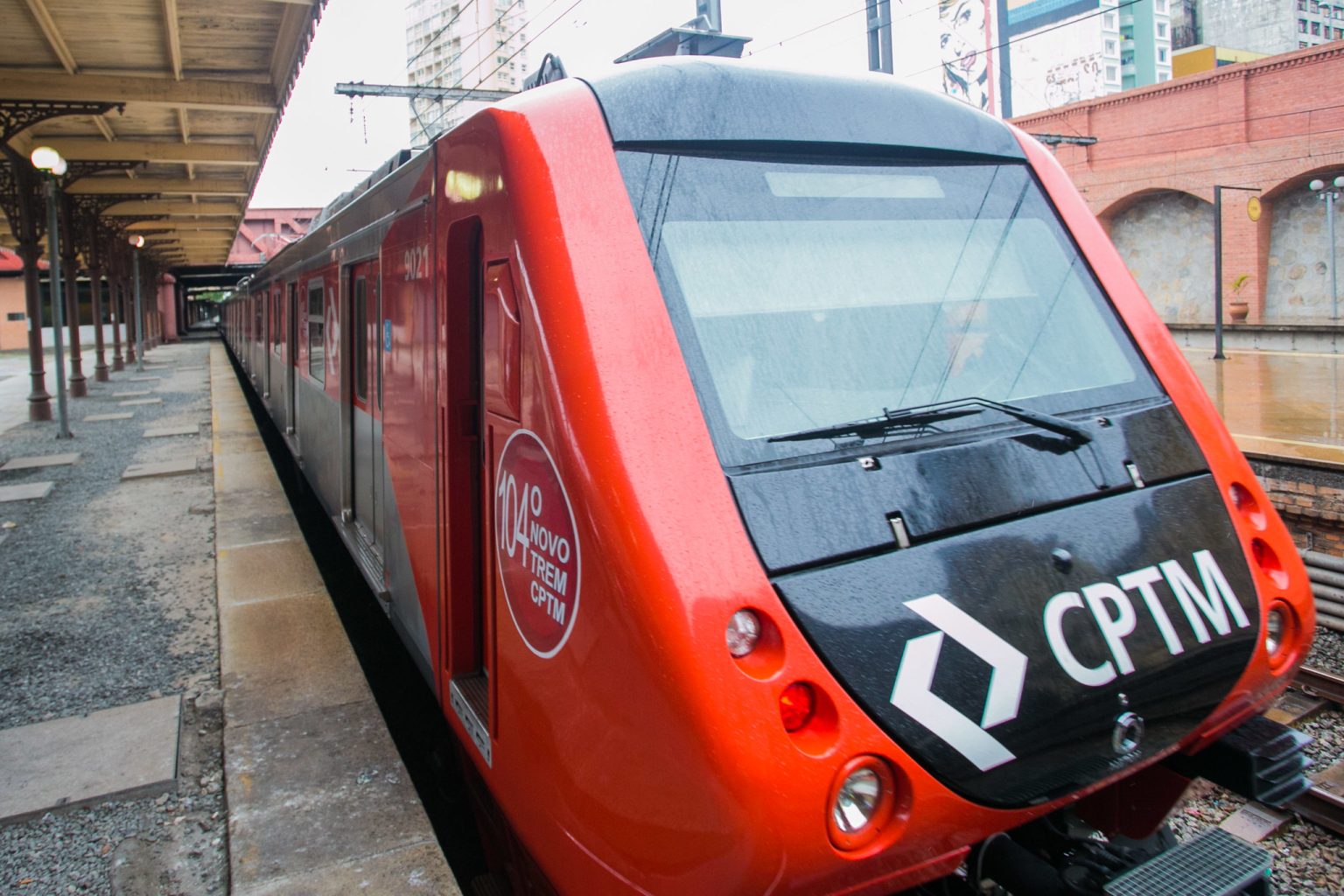
The Government of São Paulo, through the Secretariat for Investment Partnerships (SPI), has formalized the signing of the sponsored concession contract for the Alto Tietê Lot with the company Trivia Trens, part of the Comporte Participações S.A. Group. The document was published in the Official Gazette on Thursday (May 22) and marks another step forward in the modernization plan for São Paulo’s metropolitan transportation system.
Resulting from an auction held at B3, the contract establishes a 25-year public-private partnership with estimated investments of R$14.3 billion. The concession covers CPTM lines 11–Coral, 12–Safira, and 13–Jade, as well as the operation of the Airport Express Service, which connects São Paulo’s capital to Guarulhos International Airport.
The project includes the construction of ten new stations, the renovation of 24 others, and the complete reconstruction of four stations. It also includes the expansion of more than 20 kilometers of tracks. Line 11–Coral will be extended to César de Sousa Station in Mogi das Cruzes with the addition of a new stop. Line 12–Safira will be extended to Suzano, while Line 13–Jade will reach the neighborhoods of Gabriela Mistral in São Paulo’s east zone and Bonsucesso in Guarulhos — a longstanding demand from the local population that will finally be met.
With these improvements, it is expected that the three lines will jointly transport approximately 1.3 million passengers per day by 2040.
The concession will also reduce train intervals, ensuring more efficient operations and improving users’ quality of life. This will facilitate access to the job market and boost economic development throughout the São Paulo Metropolitan Region.
On Line 11–Coral, the interval will be reduced to 3 minutes between Palmeiras-Barra Funda and Suzano, and to 6 minutes between Suzano and César de Sousa. The line will be extended by 4 km to reach César de Sousa Station, with services expanded to Barra Funda.
On Line 12–Safira, the interval between Brás and Itaquaquecetuba will drop from 5 minutes to 3 minutes and 15 seconds, and between Itaquaquecetuba and Suzano, from 10 to 6.5 minutes. The line will be extended by 2.7 km to Suzano.
On Line 13–Jade, the interval will be reduced to 10 minutes. The branch will be extended to Bonsucesso, with 15.6 km of new tracks. The Airport Express will operate every 30 minutes during off-peak hours and every hour during peak hours.
Next Steps
From the signing of the contract, there is a 60-day period before it becomes effective, at which point it begins to produce legal and operational effects. From that date, the pre-operational phase begins, lasting 12 months, and is dedicated to training, technological adaptation, and the gradual assumption of operations by the new concessionaire, ensuring the safe transfer of responsibilities from CPTM. This phase also includes studies on climate resilience and risk mitigation related to extreme events, focusing on system safety.
Once the pre-operational phase is completed, the operational phase begins and will last until the end of the concession. It initially includes a 12-month assisted operation period during which CPTM monitors and supervises the concessionaire’s activities. After this period, full commercial operation begins, when CPTM ceases direct assistance and the concessionaire fully assumes management of the system. The contract will be overseen by the São Paulo State Transport Regulatory Agency (Artesp).
SP on the Tracks
The concession is part of the “SP nos Trilhos” (SP on the Tracks) program, which includes more than 40 projects aimed at expanding the railway network, including urban trains, Intercity Trains (TICs), and Light Rail Vehicles (VLTs). Together, the initiatives represent more than R$190 billion in investments and cover over a thousand kilometers of tracks across Greater São Paulo, the countryside, and the coast, establishing the largest rail mobility program in the country.