

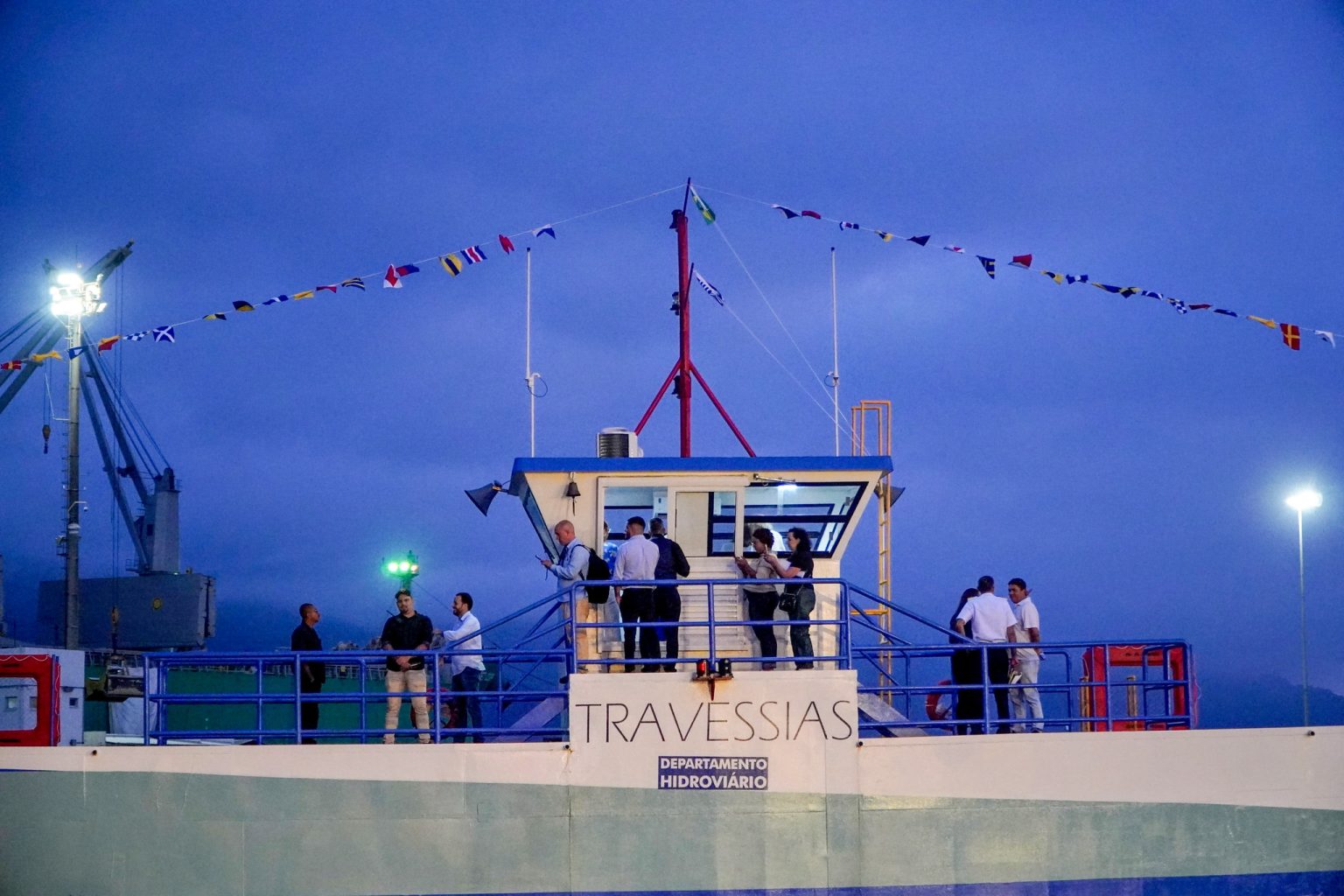
The Government of São Paulo, through the Secretariat for Investment Partnerships (SPI), announces that the approval and award of the Waterway Crossings Public-Private Partnership (PPP) were published this past Wednesday (14) in the Official State Gazette. The decision confirms the Acqua Vias SP Consortium—formed by BK Consultoria e Serviços, Internacional Marítima, Rodonave Navegações, Zetta Infraestrutura e Participações and Innovia Soluções Inteligentes—as the definitive winner of the bidding process.
The decision concludes the competitive phase and summons the concessionaire to fulfill the pre-contractual steps preceding contract signing, which is expected to take place later this semester.
With an estimated total investment of R$ 2.5 billion and a 20-year contract term, the PPP provides for the acquisition of more than 40 new vessels, most of which will be 100% electric. The project also includes the refurbishment and expansion of 20 terminals across the State of São Paulo, as well as the implementation of new maintenance workshops, operational control centers, automated toll booths and advanced automation and safety systems. The Acqua Vias SP Consortium won the auction held at B3 in November 2025 by offering a 12.60% discount on the maximum unit price per departure established in the bid notice.
During the structuring phase, the Waterway Crossings PPP became the first project in Brazil to receive the international Blue Dot Network certification, granted by the Organisation for Economic Co-operation and Development (OECD). The recognition attests to the project’s alignment with the highest international standards of governance, environmental sustainability and social responsibility.
The modernization of the state waterway crossings system will enable a reduction of up to 18,000 tons of CO₂ emissions per year, consolidating the project as one of the largest decarbonization programs for waterway transport in the country.
The routes covered include São Sebastião–Ilhabela, Santos–Guarujá, Bertioga–Guarujá, Cananéia–Ilha Comprida, Iguape–Juréia and Bororé–Grajaú, among others. The project will benefit areas of major economic and population relevance and ensure improved performance during peak periods. The model provides for fleet reinforcement during holidays and high season, ensuring more trips and reduced waiting times.