

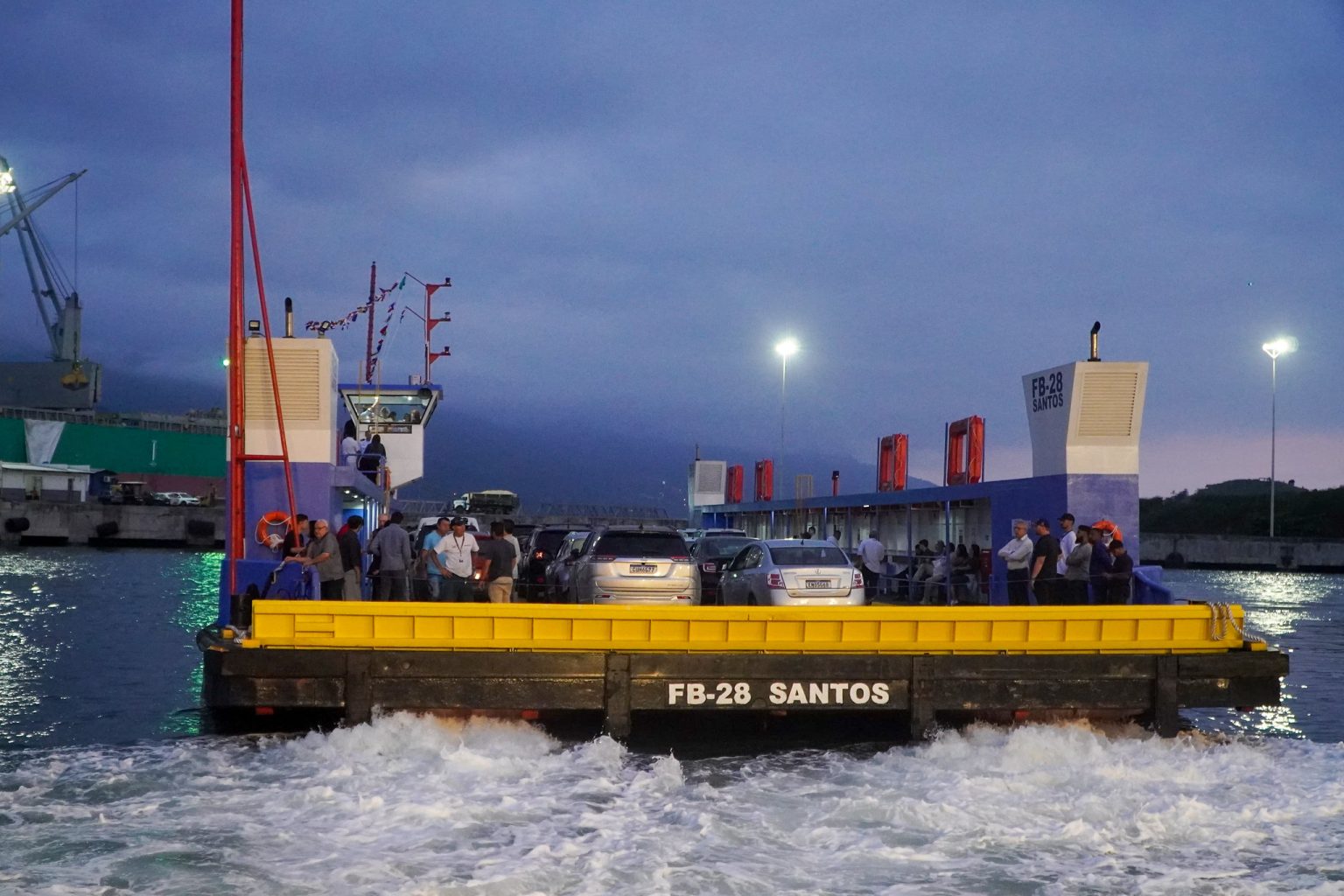
This week marks an important step toward sustainable mobility in São Paulo. On Thursday (13), the State Government, through the Secretariat for Investment Partnerships (SPI), will open the bids submitted by Acqua Vias SP – Internacional Marítima Ltda., Comporte Participações S.A., Consórcio Travessias SP and CS Infra S.A. for the Public-Private Partnership (PPP) auction of the Waterway Crossings System.
The initiative, which foresees the gradual replacement of the diesel fleet with more than 40 fully electric vessels, consolidates one of the largest decarbonization programs for waterway transport in Brazil, reinforcing the State’s commitment to ESG practices and to reducing polluting emissions. The modernization is expected to eliminate up to 18 thousand tons of CO₂ per year on coastal crossings alone, in addition to reducing noise and operating costs.
The project is also the first in Brazil to receive the Blue Dot Network certification, granted by the Organisation for Economic Co-operation and Development (OECD), during the structuring phase and before the auction. The seal demonstrates that the project meets the highest global standards of governance, environmental sustainability, social responsibility and financial transparency.
“This certification reinforces the commitment of the Government of São Paulo to regulatory stability, good governance practices and the delivery of high-standard sustainable projects. It shows that the State is prepared to attract international investment and to conduct partnerships with safety and transparency,” said Rafael Benini, Secretary for Investment Partnerships.
São Paulo’s waterway crossings cover 14 routes in different regions of the State, transporting around 40 thousand people per day, with estimated investments of R$ 2.5 billion. The system includes eight coastal lines, three in the São Paulo Metropolitan Region and three in the Paraíba Valley.
In addition to its environmental focus, the PPP will also ensure greater comfort, safety and efficiency for users, with modernized terminals, expanded floating structures and state-of-the-art vessels. Among the routes included are São Sebastião–Ilhabela, Santos–Guarujá, Bertioga–Guarujá, Cananéia–Ilha Comprida, Iguape–Juréia and Bororé–Grajaú, among others.
The system currently serves around 11 million passengers and 10 million vehicles per year and will maintain the existing fare structure, preserving gratuities and current benefits.
Investment Partnerships Program (PPI-SP)
PPI-SP is a State Government initiative designed to expand opportunities for investment, jobs and socioeconomic, technological, environmental and industrial development in São Paulo.
Focused on the areas of Highways, Mobility, Social Infrastructure and Water/Energy, PPI-SP is delivering the largest and most comprehensive private-investment program in the history of São Paulo, benefiting the state’s population and driving regional economic growth. In total, the program includes more than 30 qualified projects and an investment portfolio of over R$ 550 billion.