

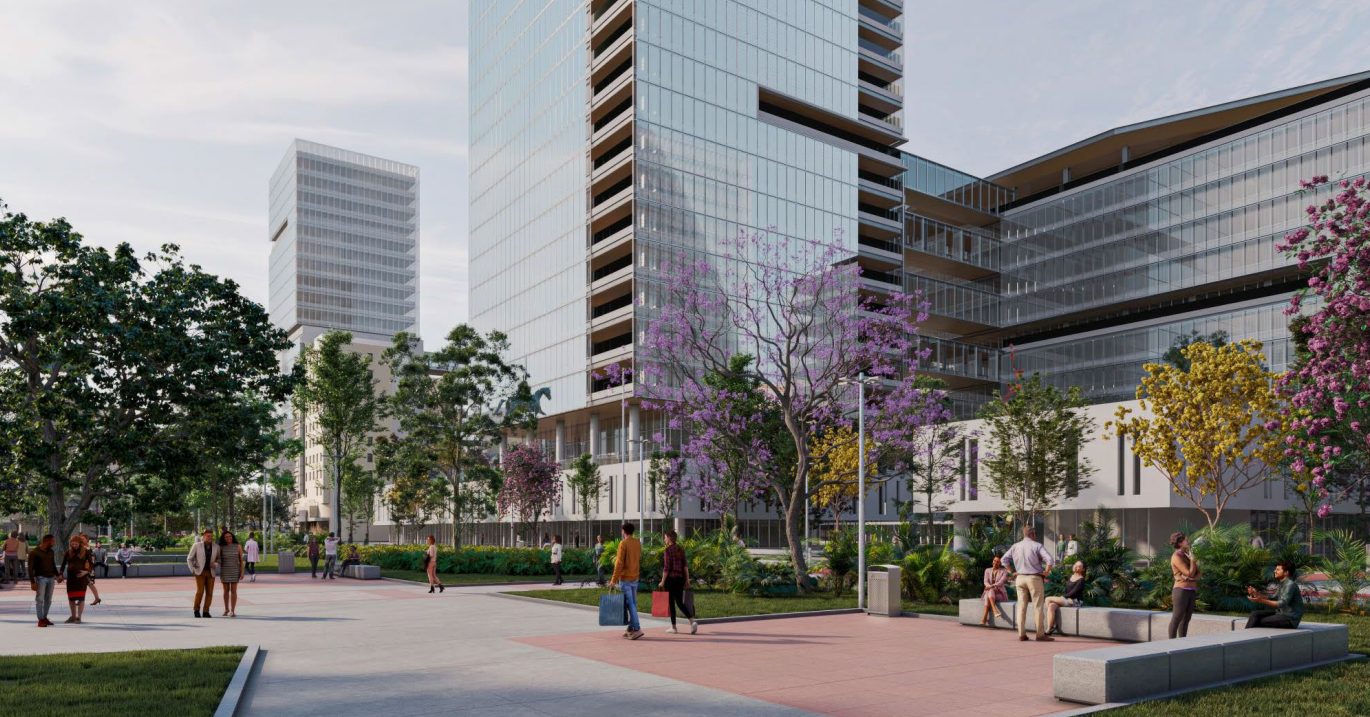
A city that looks to the future while valuing its history. This is the principle guiding the initiative of the Government of São Paulo to restore historic mansions and listed buildings in Campos Elíseos, in downtown São Paulo, as part of the New Administrative Center project. The concession auction took place on February 26 at B3 in São Paulo and was won by the MEZ-RZK Novo Centro consortium, which submitted a proposal offering a 9.62% discount on the maximum monthly public payment set at R$ 76.6 million.
In total, 17 listed properties will be restored. Many of them are currently underused or deteriorated, and the restoration will ensure their preservation while assigning them new social, cultural, and public service support functions. The initiative is part of a broader urban revitalization effort planned for the region, focused on strengthening the vitality of the historic city center, attracting more people to the area, and expanding services for the population.
Agência SP conducted a survey and detailed the 17 buildings that will be restored under the New Administrative Center project. The list includes traditional mansions, former public facilities, and other historic properties.
“This project goes far beyond administrative rationalization. We are talking about a new perspective for downtown São Paulo, based on urban revitalization that respects the city’s memory. Preserving these buildings means preserving São Paulo’s identity,” said the Secretary for Strategic Projects (SPE), Guilherme Afif.
With estimated investments of R$ 6 billion, the project developed by the Secretariat of Partnerships and Investments (SPI) includes the construction of the New Administrative Center, which will bring together approximately 22,000 public servants currently distributed across nearly 40 addresses in the capital. In addition to modernizing public management and reducing operational costs, the project places the preservation and appreciation of heritage at its core, following the guidelines of heritage protection agencies and promoting qualified use of these spaces.
Most of the buildings to be restored are former residences built between the late 19th century and early 20th century, many designed by architects such as Pedro de Mello e Souza. These buildings feature typical elements of eclectic and neoclassical architecture of the period, such as side porches, setbacks on all sides of the lot, terraces with balustrades, and the use of noble construction materials.
Among the highlights are the Casa da Solidariedade, the former residence of Bento de Almeida Prado, and the Fundunesp building, originally built for Chiquinha Ribeiro do Val, both located in a privileged area surrounding the Campos Elíseos Palace.
Historic preservation in downtown São Paulo
The Campos Elíseos Palace, a symbol of São Paulo’s political history built in the late 19th century, is one of the main historic buildings that will be preserved in the project. It will serve as a grand reception hall for the governor on formal occasions, such as hosting heads of state and official ceremonies. The Secretariat of Justice and Citizenship was transferred to the site at the end of 2024, marking another step in the Government’s effort to revitalize the neighborhood.
Most of the listed properties within the project area of the new administrative headquarters are former residences and are part of the urban landscape between Guaianazes Street, Rio Branco Avenue, and the Glete and Ribeiro da Silva avenues. Restoration works will enable diverse uses, defined according to contractual rules and heritage preservation guidelines, helping to restore vitality and functionality to these spaces.
One of the 17 significant buildings that will be preserved is the Regional Education Unit – Center-West building, located on Rio Branco Avenue. Originally built as a high-standard residence between the late 19th and early 20th centuries, the eclectic construction stands out for the refined details on its façade. The property is part of a homogeneous architectural ensemble and will be preserved with its original characteristics.
In addition to the new administrative headquarters, the project includes the construction of a Convention Center in the so-called Block 25 area, with multipurpose rooms for events and a theater, which will be shared between the State and the private partner.
“We want this facility to help strengthen the cultural and tourist hubs in downtown São Paulo, with activities open to the public that foster socioeconomic development for those who live, work, and spend time in the area,” Afif highlighted. The initiative is part of a broader set of actions that combine functionality, urban recovery, and respect for history, contributing to transform downtown São Paulo into a more integrated and valued territory.
Public approval of the New Administrative Center
The relocation of the Administrative Center to the heart of the capital also has strong public approval. A survey conducted by the Datafolha Institute, which interviewed 1,564 people, revealed that 83% of residents or workers in the central region believe the area will become safer. Respondents also expect improvements in urban cleanliness (80%), job opportunities (74%), tourism in the region (70%), and housing conditions (55%).
Among the city’s overall population, 64% of São Paulo residents consider the change excellent or good, and 77% believe security conditions will improve. In addition, between 79% and 84% believe the project will bring more benefits than drawbacks for residents, business owners, workers, and the city as a whole.
Investment Partnerships Program (PPI-SP)
The New Administrative Center project is part of PPI-SP, an initiative of the State Government aimed at expanding opportunities for investment, employment, and socio-economic, technological, environmental, and industrial development in São Paulo.
With a focus on Highways, Mobility, Social Infrastructure, and Water/Energy, PPI-SP is implementing the largest and most comprehensive private investment program in the history of São Paulo, benefiting the population and boosting regional economic growth. In total, more than 30 projects have been qualified, with an investment portfolio exceeding R$ 550 billion.