

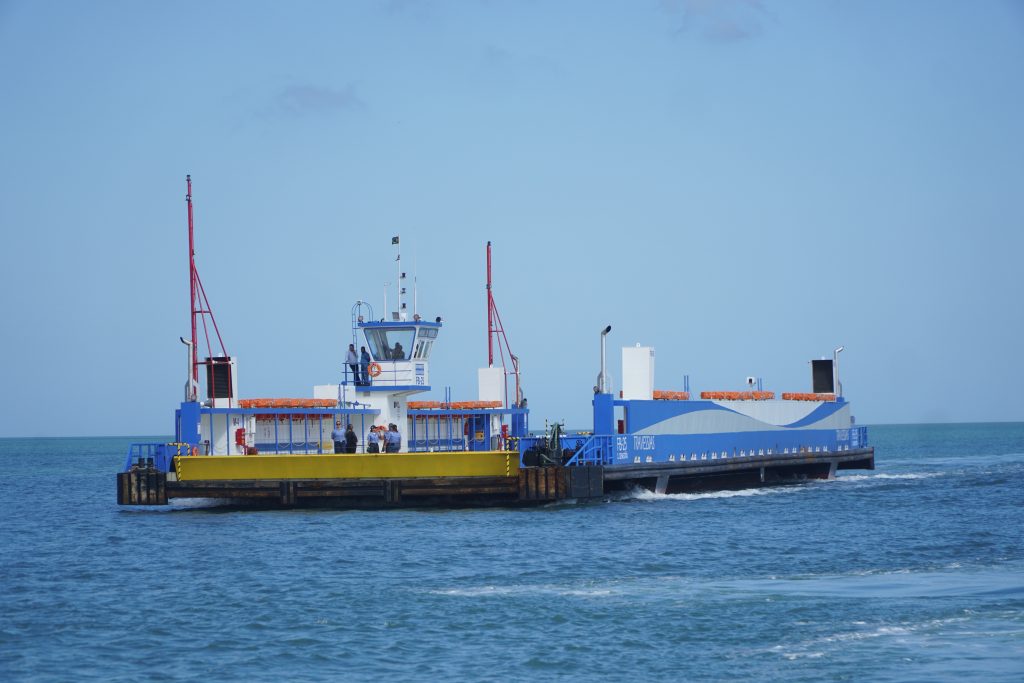
The Government of São Paulo, through the Secretariat for Partnerships and Investments (SPI), is advancing another initiative to improve mobility and the quality of public services. The concession project for the Waterway Crossing System, to be auctioned on November 13 at the São Paulo Stock Exchange (B3), foresees a complete renewal of the infrastructure and fleet that serve millions of residents each year.
With estimated investments of R$ 2.5 billion, the plan includes new terminals, modern vessels, and improved services, ensuring greater comfort, safety, and operational efficiency. The new facilities will be standardized and accessible, with climate-controlled environments, adapted restrooms, and areas for dining and customer service.
The project covers 14 ferry lines — eight along the coast, three in the São Paulo Metropolitan Region, and three in the Paraíba Valley — featuring 45 new electric, hybrid, and more energy-efficient vessels. The model ensures that the current fare base is maintained, preserving existing exemptions and benefits.
The crossings include São Sebastião–Ilhabela, Santos–Vicente de Carvalho, Santos–Guarujá, Bertioga–Guarujá, Cananéia–Continente, Cananéia–Ilha Comprida, Cananéia–Ariri, Iguape–Juréia, Bororé–Grajaú, Taquacetuba–Bororé, João Basso–Taquacetuba, Porto Paraitinga, Porto Varginha, and Porto Natividade da Serra. Together, they transport about 11 million passengers and 10 million vehicles per year.
With a 20-year contract under the Public-Private Partnership (PPP) model, the project reinforces the Government of São Paulo’s commitment to modern infrastructure, sustainability, and operational efficiency, under the supervision of the São Paulo State Transport Agency (Artesp).