

The Government of São Paulo is implementing a new standard of railway signaling that will transform rail transport across the Metropolitan Region. This is the ETCS (European Train Control System), an international technology that increases network capacity, reduces train intervals, and enhances operational safety. The adoption of this system marks a key step for the state to advance toward an integrated and efficient model, benefiting millions of passengers daily.
The system is included in the contracts for Lines 11–Coral, 12–Safira, 13–Jade, and the Intercity Train, including Line 7–Rubi, under the oversight of the São Paulo State Transport Regulatory Agency (Artesp). For Lines 8–Diamante and 9–Esmeralda, which are part of previous concessions, migration will occur gradually, ensuring full integration of the entire metropolitan network in the future.
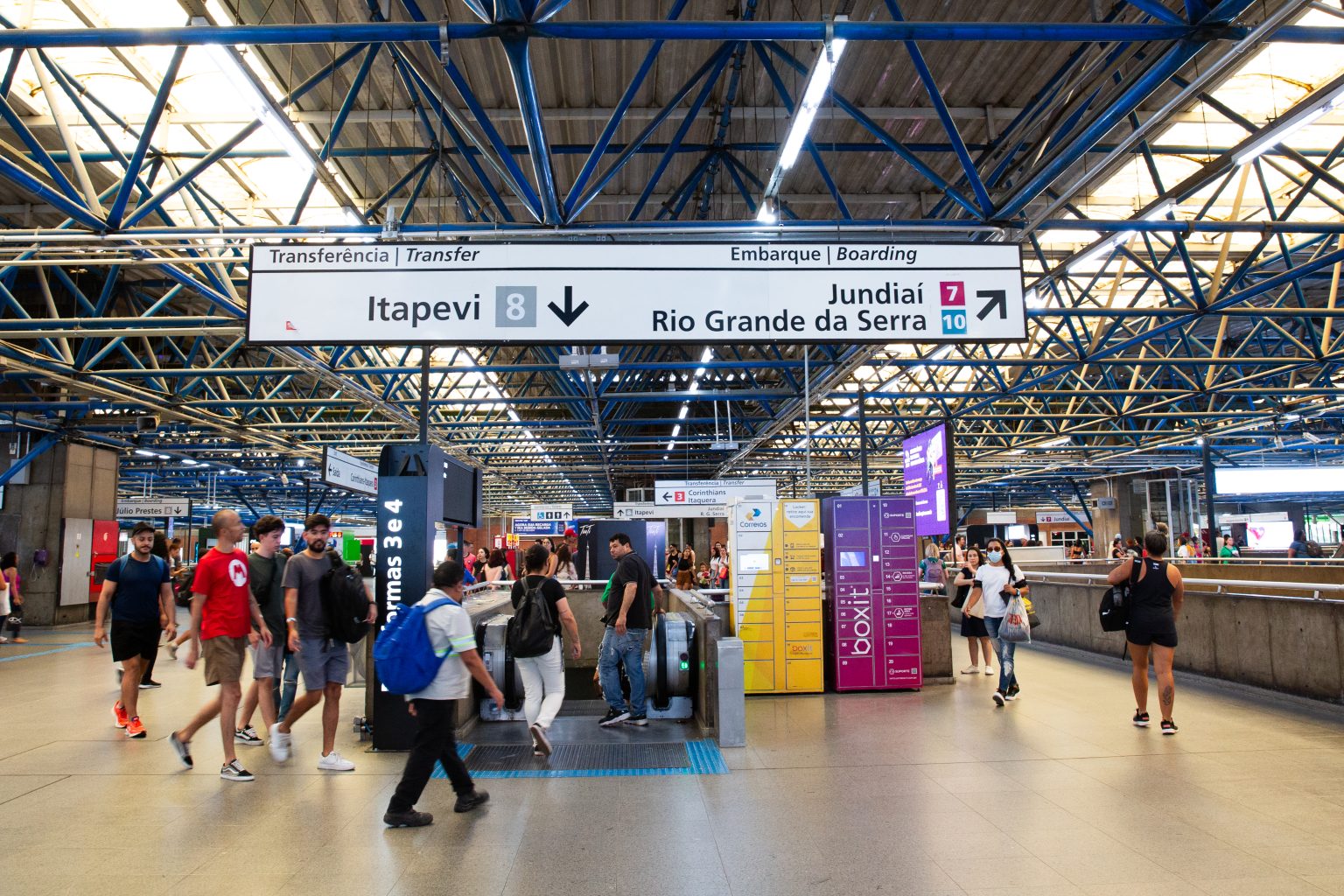
To implement the new technology, a series of changes have been underway since August on CPTM lines, such as transforming the Palmeiras–Barra Funda terminal station into the main rail transport hub in the capital, where passengers from Lines 11–Coral, 7–Rubi, and 10–Turquesa now use the station as a central point for their journeys.
According to the state secretary of Partnerships and Investments, Rafael Benini, the changes are necessary to enable modernization works. “We are interconnecting all signaling systems to adapt to the ETCS model. The signaling across all lines will communicate, which will allow, for example, a train from Line 8 to run on Line 7–Rubi, Line 10–Turquesa, or Line 11–Coral. To make this possible, we made changes at Barra Funda station. The future gains of having integrated signaling across all lines will be very significant.”
The new arrangement between Lines 7–Rubi and 10–Turquesa has already brought immediate benefits to passengers. The extension of Line 10–Turquesa to Barra Funda ensures faster and simpler integration with Line 7–Rubi, with opposite platforms at the same level and no additional cost to the passenger. This solution facilitates journeys and maintains the connection between the two lines, even with the suspension of Service 710 during the modernization works.
According to the Secretariat of Partnerships and Investments, this technological standardization represents a new level of quality in railway transport, aligned with international best practices and always focused on direct passenger benefits.
The change also helps to better distribute passenger flows throughout the system. Stations like Luz and Brás will experience relief under the new configuration. Passengers coming from the ABC region, Alto Tietê, the interior, and different areas of the capital will have more options for their routes, reducing congestion at high-demand hubs.
Rafael Benini emphasized that these changes will have a direct impact on daily users. “We are bringing significant investments to the lines. New trains, shorter intervals, greater flexibility between lines. This will bring many benefits to the people who use these lines every day,” he said.
Further progress
In addition to the changes that turned Barra Funda into a hub, CPTM has recently implemented improvements on other lines. On Line 12–Safira, loop operations were adjusted, allowing direct service between Brás and Calmon Viana, with an average interval of 4.5 minutes during peak hours. On Line 13–Jade, headways were reduced to 10 minutes during peak periods, expanding seat availability. On the Expresso Line 10, connecting Santo André to Tamanduateí, trains now run every 20 minutes during peak demand.
New operational management
In August, TIC Trens began operating Line 7–Rubi under CPTM’s supervision and guidance. This “supervised operation” will continue until November 26, when commercial service begins, as established in the concession contract with the São Paulo State Government. From then on, TIC Trens will be responsible for operating, maintaining, and modernizing the Line 7–Rubi metropolitan trains, as well as the North Axis Intercity Train (TIC) and the Intermunicipal Train (TIM).
The TIC express service is expected to launch in May 2031. It will be Brazil’s first medium-speed train, linking São Paulo to Campinas with a stop in Jundiaí, reaching speeds of up to 140 km/h, a capacity of up to 860 passengers per trip, over 101 kilometers in 64 minutes. The TIM service is scheduled to start in May 2029, connecting Jundiaí to Campinas over 44 kilometers in 33 minutes, with stops in Louveira, Vinhedo, and Valinhos.
The auction for the project took place in February 2024. The C2 Rail Mobility Consortium was the winner, with an estimated investment of R$ 14.2 billion.
Photo: Government of São Paulo