

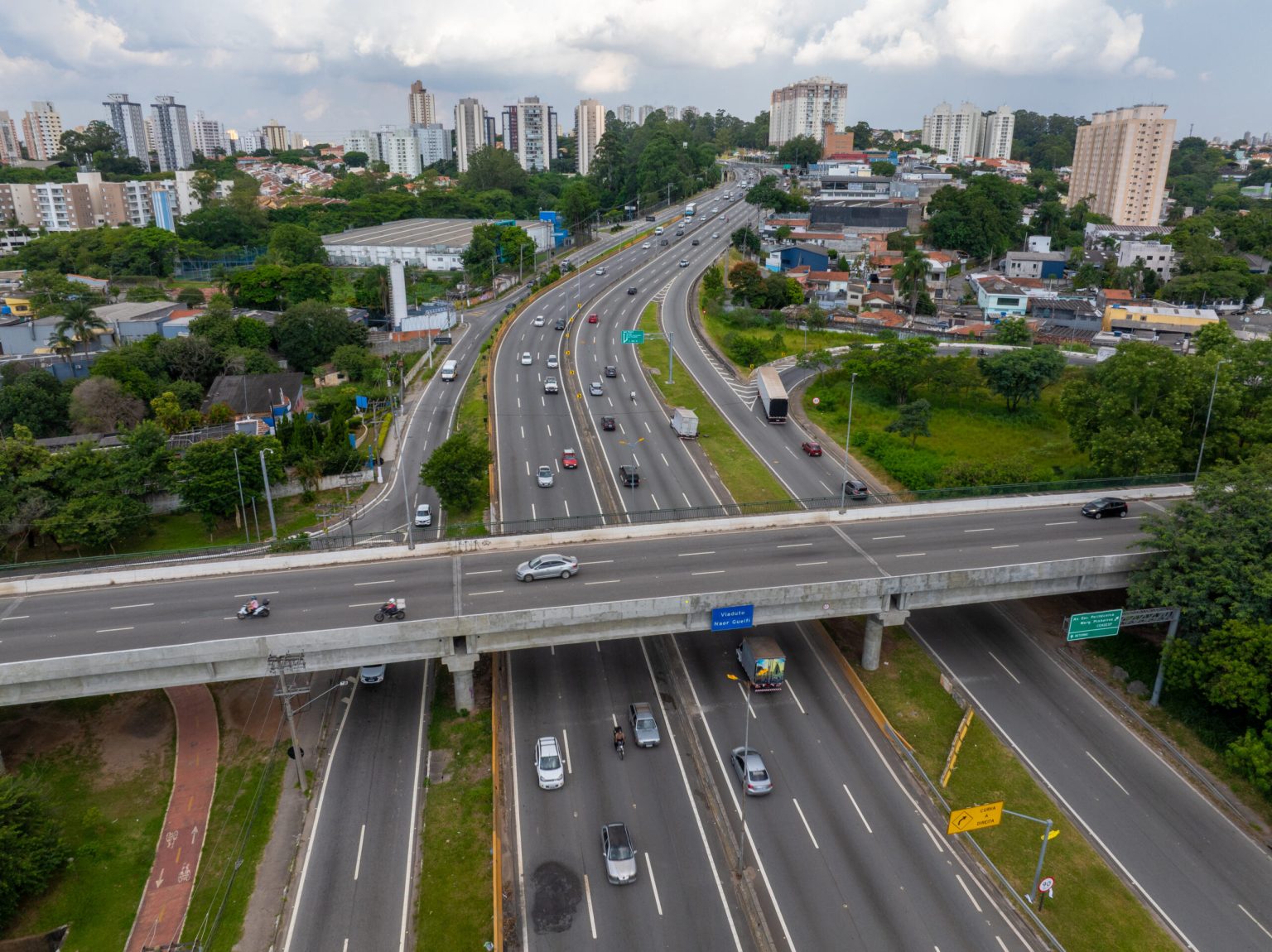
The Government of São Paulo, through the Secretariat for Investment Partnerships (SPI), is advancing its highway concession program with the New Raposo Tavares (SP-270) project, which foresees R$ 8 billion in modernization works. The initiative will transform one of the main corridors of the Metropolitan Region, expanding mobility, reducing accidents, and offering greater safety for drivers and pedestrians.
On the stretch between Cotia and São Paulo (km 10.94 to km 34), managed by Ecovias Raposo Castello, continuous non-tolled frontage roads will be built, traffic lights will be eliminated, and access points will be reorganized. These interventions are expected to improve traffic flow and reduce risk points. The electronic tolling system (Siga Fácil) will only begin operating after the completion of the works, in 2032, ensuring that users first benefit from the initial improvements.
Raposo Tavares is among the highways with the highest accident rates in the state, with 96 deaths recorded in 2023, according to Infosiga. Experience on other concessioned highways has shown consistent results: an average 51% reduction in fatalities and 48% in accidents. The expectation is that the New Raposo will follow this trend, saving lives and providing greater comfort for users.
Sustainability
With a focus on mobility, sustainability, and safety, the New Raposo represents a significant transformation for one of the main corridors of the metropolitan region — delivering long-term benefits for drivers, pedestrians, and communities.
Since the start of the concession, technical teams have been conducting detailed studies of the region, taking into account geological, environmental, and socioeconomic aspects. These surveys, along with the preparation of the Environmental Impact Study and Report (EIA/RIMA) currently under review by CETESB, will support the definition of the final layout of the New Raposo. The proposal will be presented in a public consultation, ensuring transparency and public participation. The executive project is currently under development.