

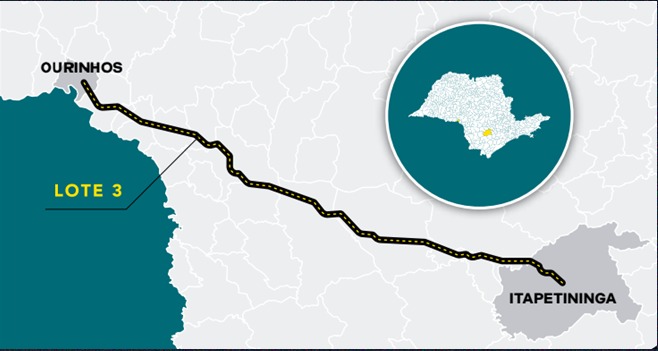
The Government of São Paulo published the public notice for the concession of the Paranapanema Lot in the State Official Gazette this Monday (9). The project was refined based on contributions received during the Public Consultation and three Public Hearings held in Ourinhos, Itapetininga, and São Paulo. The initiative, coordinated by the Secretariat for Investment Partnerships (SPI), covers 285 kilometers of highways and foresees R$ 5.8 billion in investments, with figures updated to the base date of January 2025. The project reinforces the State’s commitment to modernizing road infrastructure and improving highway safety.
More than 250 contributions from the public and regional representatives were analyzed. Approximately 53% of the suggestions were fully or partially accepted, reflecting the importance of public participation in shaping infrastructure policies. The refinement of the project demonstrates the São Paulo State Government’s willingness to listen to local demands and incorporate technical adjustments to improve traffic flow and user comfort.
Among the key changes is the expansion of the project’s scope, with the inclusion of new highway segments and devices. Improvements include road duplications, access points, pedestrian overpasses, frontage roads, and grade-separated interchanges — all focused on road safety and addressing population needs. Toll gantry locations were also revised to minimize impact and ensure fairer pricing, proportional to the distance actually traveled.
With the publication of the public notice, the Paranapanema Lot moves forward to the auction phase, scheduled for the second half of 2025. The concession will attract private investment for the operation, maintenance, and expansion of the highway network over a 30-year period. The model will follow a sponsored concession format, covering highways currently operated by the São Paulo State Department of Highways (DER-SP), under the regulation of ARTESP. The project is part of the São Paulo State Investment Partnership Program (PPI-SP), which aims to improve public services, create jobs, and boost economic development in the regions served.