

On Wednesday (26), the Government of São Paulo qualified two more projects under the São Paulo State Investment Partnership Program (PPI-SP), coordinated by the Investment Partnership Secretariat (SPI). The decision was approved during a meeting of the PPI Council, held at Palácio dos Bandeirantes.
The initiatives involve the expansion of water resilience in the state, through the UniversalizaSP Program, and the preparation of feasibility studies for the delegation of semi-urban public transport in metropolitan and non-metropolitan regions.
“We are moving forward with projects that will strengthen transportation, expand access to sanitation and boost regional development. With planning and strategic partnerships, we guarantee investments that create jobs, increase the efficiency of services and prepare São Paulo for the future,” says Governor Tarcísio de Freitas.
The approval was given by the Board of Directors of the Privatization Program (CDPED) and the Management Council of the Public-Private Partnership Program (CGPPP). The meeting was attended by the vice-governor and president of the collegiate body, Felicio Ramuth; the secretary of Investment Partnerships, Rafael Benini; the chief secretary of the Civil House, Arthur Lima; the secretary of Finance, Samuel Kinoshita; the secretary of Environment, Infrastructure and Logistics, Natália Resende; and the state attorney general, Inês Coimbra.
In the field of water resilience, the studies will assess the feasibility of projects and works in São Paulo municipalities. The scope includes the entire chain of drinking water supply and sewage services – from water collection and production to loss management – as well as topics such as urban drainage, natural disaster prevention and water scarcity mitigation.
In the transport sector, the focus will be on the implementation of infrastructure, operation and maintenance of semi-urban passenger transport in areas characterized as Regions of Influence of Cities (REGICs), where there is a high population density around larger urban centers. The studies will analyze lines and routes to optimize the public transport offer, with a view to expanding services, making better use of resources and integrating with existing urban mobility.
“The creation of regular semi-urban transportation services in metropolitan and non-metropolitan regions tends to increase access to jobs, while distributing income to smaller centralities, increasing regional economic resilience,” says Secretary Rafael Benini.
Approval of models
The PPI Council also approved the final modeling for two projects already qualified for the PPI-SP: the Paranapanema Lot and the School Adequacy and Maintenance project. The next stage will be to draw up the public notices and hold the auctions.
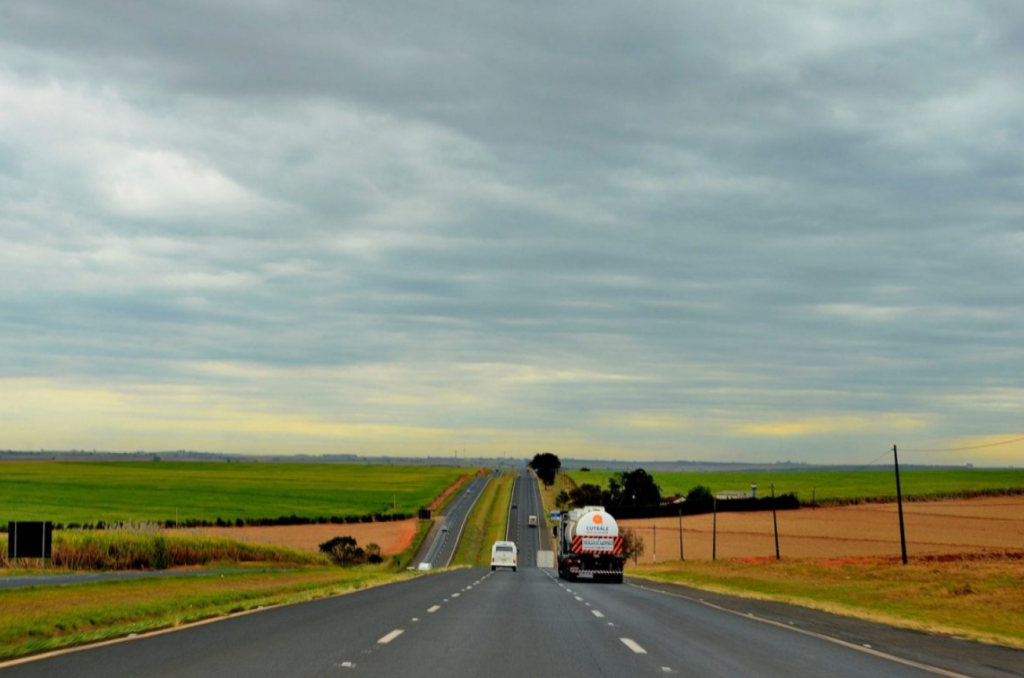
The Paranapanema Lot provides for the sponsored concession, for 30 years, of 285 km of highways, especially the axis of the Raposo Tavares Highway (SP-270), between Itapetininga and Ourinhos. The package includes stretches of the SP-189, SP-278, SPA-204/270, SPA-245/270, SPA-312/270 and SPA-326/270. Investments of R$5.7 billion are planned, with an estimated generation of 5,700 direct and indirect jobs.
Among the main interventions are: the duplication of 154.4 km of highways; the installation of 8 km of shoulders and 14.6 km of marginal roads; the construction of 42 new interchanges and the readjustment of another 13; the renovation of 14 traffic circles; the construction of 22 footbridges and the installation of 114 bus stops.
The second project includes the adaptation and maintenance of 143 state schools, focusing on the provision of non-pedagogical services. The PPP will modernize the infrastructure of 70 schools in the Central-West Directorate and 73 in the East 5 Directorate, which serve more than 85,000 primary and secondary school students in the capital and metropolitan region of São Paulo. The planned investment is R$1.7 billion over 20 years.
The proposal seeks to modernize the model for contracting educational infrastructure, since part of the services are already carried out by private companies. The PPP will guarantee safer and more modern environments for students, teachers and staff, allowing educators to focus on the quality of teaching. The concessionaire will be responsible for renovations, building maintenance and support services, while the state will continue to be responsible for the pedagogical project.
Investments in Água Branca Station
The Council also authorized the expansion of Água Branca Station. The works include the installation of platforms to serve the trains of the Intercity Train (TIC) Eixo Norte, Line 9-Esmeralda and the future TIC Eixo Oeste. It is also planned to relocate Line 8-Diamante between Barra Funda and Lapa stations, allowing this branch to also access Água Branca. The contributions were provided for in the TIC Eixo Norte contract and will be carried out by the TIC Trens concessionaire.
With the improvements, Água Branca Station will be one of the state’s main mobility hubs, serving CPTM Lines 7-Rubi, 8-Diamante and 9-Esmeralda, Metro Lines 3-Red and 6-Orange, as well as the North (Campinas) and West (Sorocaba) TICs.
The Eixo Norte Intercity Train represents a milestone in the state’s mobility. With a length of 101 km, it will connect São Paulo to Campinas, with a 64-minute express journey between Barra Funda, Jundiaí and Campinas. The project also includes the Intermetropolitan Train (TIM), which will connect Jundiaí to Campinas in 33 minutes over 44 km. The concession includes the operation of CPTM Line 7-Rubi. The initiative is expected to generate more than 10,000 direct, indirect and induced jobs, benefiting 11 municipalities and positively impacting around 15 million people. The contract with TIC Trens was signed in May 2024.
Investment Partnership Program (PPI)
The PPI-SP is a state government initiative aimed at expanding investment opportunities, employment, socio-economic, technological, environmental and industrial development in São Paulo.
Focusing on the areas of Highways, Mobility, Social and Water/Energy, the PPI-SP is carrying out the largest and most complete investment program with the private sector in the history of São Paulo, benefiting the São Paulo population and boosting regional economic growth. In all, there are already 31 qualified projects and a portfolio of more than R$494 billion.