

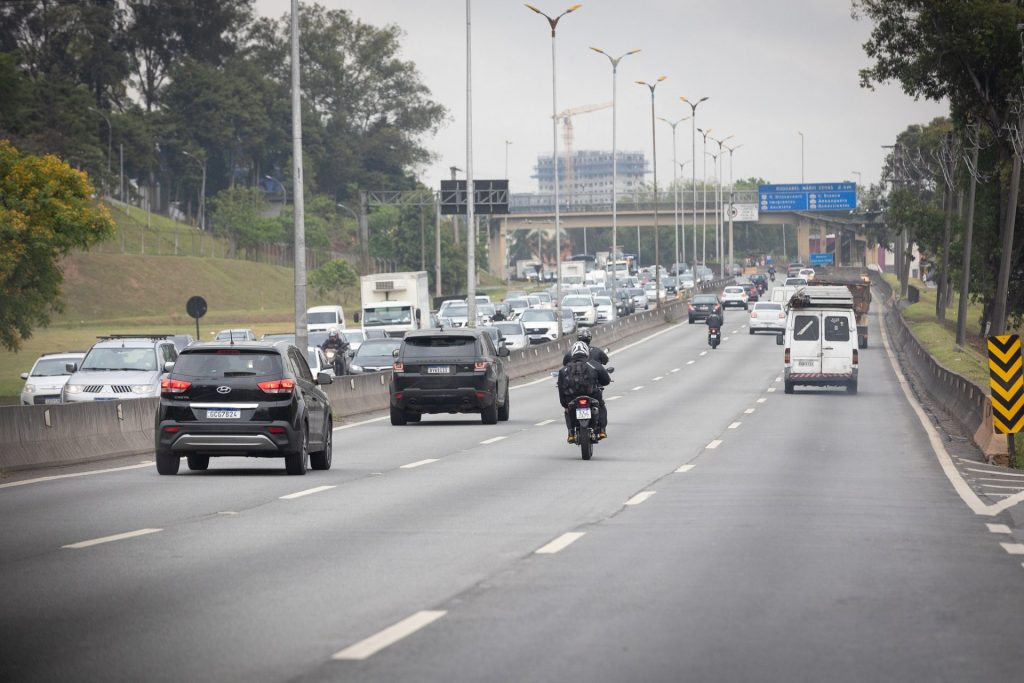
The Government of São Paulo has incorporated the exemption for motorcyclists as a guideline in concession contracts signed from 2023 onwards. The measure is already included in projects such as Litoral Paulista, Rota Sorocabana, Nova Raposo, Circuito das Águas, Rota Mogiana and Lote Paranapanema, as part of a fairer and more accessible tariff policy.
These concessions also adopt the electronic toll model (free flow) — a system that dispenses with physical toll plazas and carries out the tariff automatically, through gantries installed along the highways. The charge is based on the number of kilometers actually traveled by drivers, ensuring that each user only pays for the stretch used.
In addition to promoting fair fares, free flow improves traffic flow on the roads, eliminates stops, reduces the risk of accidents and increases road safety.
The system is already used successfully in several countries, such as the United States, Canada, Norway, Sweden, Portugal, Australia, New Zealand and Chile, where it has established itself as a modern and efficient solution for mobility on highways. In Brazil, this model is expanding and represents the future of highway concession management.
The application of the exemption for motorcyclists is also being analyzed for contracts that predate this guideline, such as those for Rodoanel Norte and Econoroeste. The objective is to evaluate legal and contractual alternatives to incorporate the same fair fare standard adopted in the new concessions.